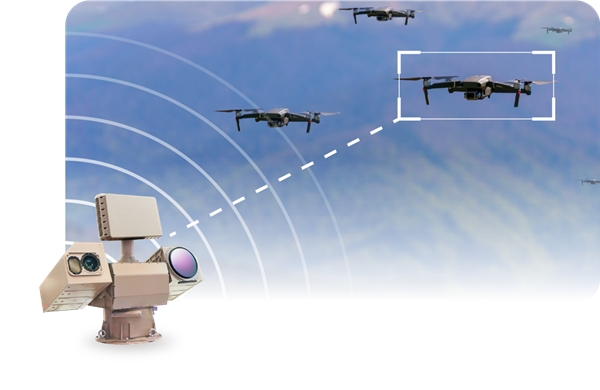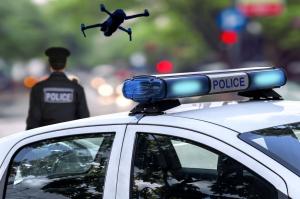
Spectrum analyzer+interference gun combination is a good option for grassroots police
1, Understand the characteristics of grassroots work
When grassroots patrol officers carry out anti drone tasks, and they often face three practical conditions:
The duty area covers complex terrains such as urban-rural fringe areas and residential areas
Equipment budget is usually limited (100000-500000 yuan)
The professional technical training time for personnel is relatively short
Suggestion: prioritize devices that are easy to operate and maintain, with a focus on their all-weather working ability and fast response characteristics. For example, when on duty in residential areas, it is necessary to avoid high-power devices affecting the public’s home WiFi, and when conducting field patrols, the waterproof and dustproof performance of the devices should be considered.
2, Basic equipment configuration plan
For common grassroots task scenarios, we recommend a “three-level defense system”:
Basic detection layer (50000 to 150000 yuan)
Handheld spectrum analyzer: detects drone signals within 1 kilometer
Dual tube telescope with laser ranging: fast positioning of airborne targets
Mobile APP assisted recognition: using “drone warning” applications
Conventional disposal layer (80000 to 200000 yuan)
Portable jamming gun: blocks drone signals within 500 meters
Acoustic directional disperser: effective for consumer grade drones
Vehicle mounted signal jammer: covering the surrounding area of patrol vehicles
Emergency interception layer (100000 to 300000 yuan)
Netball launcher: Physical capture within a range of 20-50 meters
Modifying a drone to mount a capture net: requires licensed operation
Lift type signal interference pole: temporarily installed in key areas
Suggestion: county-level units adopt a combination of “basic detection+conventional disposal”, and key townships can increase emergency interception equipment.
3, Equipment selection and pit avoidance guide
Avoid falling into four common pitfalls during procurement:
Blind pursuit of effective range: The market labeled “3-kilometer detection” device may have an actual effect of less than 500 meters in densely populated building areas
Neglecting device endurance: Continuous operation for 2 hours is a basic requirement, and battery capacity will decrease by 30% in winter
Ignore electromagnetic compatibility issues: simultaneous activation of multiple devices may interfere with each other
Disregarding offline trials: Requesting suppliers to provide a 7-day on-site testing period
Focus on three core parameters:
① Power on response time<30 seconds
② False alarm rate<5%
③ Equipment weight<8 kilograms (carried by a single soldier)
4, Daily usage skills
Quickly identify suspicious drones
Observation of flight characteristics: Non compliant drones often exhibit a reconnaissance mode of “hover move hover”
Listen to the sound of the motor: The multi rotor drone has a noticeable buzzing sound (800-1200Hz)
Check signal characteristics: DJI products have fixed signal characteristic codes
Equipment combination method
Identify the target and confirm the model with a spectrometer first
The duration of the interference gun’s action does not exceed 90 seconds
Immediately turn off interference after physical interception to avoid damage to evidence collection
Special environmental response
Check the waterproof level of the equipment before use on rainy days (IP54 is qualified)
Carrying spare batteries in sub zero environments (with half the low-temperature capacity)
Prioritize the use of optoelectronic devices in electromagnetic interference areas
5, Key points of maintenance and upkeep
Grassroots units can establish a “three-level maintenance system”:
Daily check
Equipment appearance integrity
Remaining battery level
Storage data cleaning
Weekly maintenance
Cleaning of charging interface
Firmware version check
Test signal transmission function
Quarterly maintenance
Professional organization calibration
Antenna sensitivity detection
Software database update
Suggest signing a maintenance agreement with the supplier that includes 20 on-site services per year, and with a focus on maintaining the signal generation module and battery pack.
6, Typical Case Study
Case study of black fly disposal in the market
Equipment used: Spectrum analyzer+interference gun
Operation process: Discovering abnormal signals → Identifying as drones → Interfering with forced landings → Manually searching for pilots
Experience summary: Control the interference time in densely populated areas within 60 seconds
Night patrol case
Equipment used: thermal imaging camera+mesh launcher
Operation process: Heat source identification → Confirm drone → Launch capture net
Attention: Night shooting should be coordinated with lighting and positioning
Case study of group event prevention and control
Equipment used: Car mounted shield+lifting interference pole
Key points of defense: Form a protective circle with a diameter of 300 meters
Lesson learned: It is necessary to report to the radio management department in advance
7, Preparation for future development
Suggestions for grassroots units to make three reserves:
Talent reserve: cultivate 2-3 certified operators
Technical reserve: Focus on AI recognition drone technology
Data reserve: Establish local drone pilot files
Priority upgrade when funds are limited:
① Detection equipment with AI recognition
② Jammer that support 4G/5G signal blocking
③ Reusable interception netting
Summary:
Grassroots patrol officers should adhere to the principle of “practicality first, moderate advancement” when choosing anti drone equipment, meantime, focusing on the three core elements of equipment reliability, ease of operation, and maintenance economy. It is recommended to adopt a “step-by-step procurement and module stacking” approach to prioritize meeting daily inspection needs and gradually improve emergency response capabilities. So,adopt spectrum analyzer+interference gun combination.At the same time, strengthen case review and simulation exercises to ensure the maximum effectiveness of equipment.