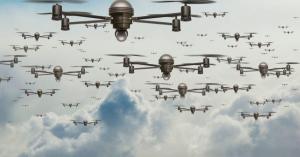
In modern warfare, drone swarms pose a formidable challenge to traditional air defense systems due to their small size, large numbers, and coordinated operations. They can carry out reconnaissance and suicide attacks, and have repeatedly breached air defense networks in local conflicts, threatening the safety of key facilities. High-power microwave anti-drone weapons offer hope in addressing this challenge.
For example, on January 6, 2018, the Russian Hmeimim Air Base in Syria and the Tartus Port Supply Station Base were attacked by a swarm of 13 drones, each carrying 10 bombs, showcasing the immense potential of drone swarm attacks. During the 2020 Nagorno-Karabakh conflict, Azerbaijan’s combat drones became a crucial factor in determining the war’s outcome. The 2022 Russia-Ukraine conflict further highlighted that low-cost drone warfare is emerging as a highly cost-effective new combat method. These examples demonstrate that drone swarm operations are becoming a key development direction in future warfare, posing a severe challenge to countries’ low-altitude defense systems.
Working Principle
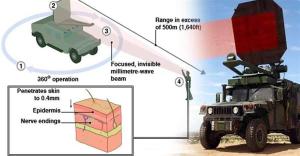
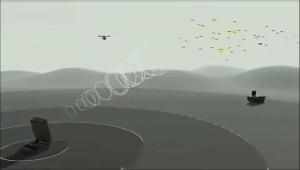
High-power microwave anti-drone weapons use electromagnetic waves ranging from 300 mHz to 300 GHz, radiated at the speed of light through high-gain directional antennas. The microwaves enter drones through front-door coupling (entering via antennas) and back-door coupling (induction via cables or electromagnetic field effects in cavities), inducing strong electromagnetic fields on internal metal surfaces or wires. This triggers field effects, causing electronic components to degrade or even break down, disrupting the drone’s electronic systems and rendering it uncontrollable.
Advantages in Countering
Fast Attack Speed
High-power microwaves travel at the speed of light, it can reaching targets instantly without the flight time required by traditional air defense weapons (such as missiles). When facing drone swarms, they can respond quickly, striking multiple targets in a very short time and significantly improving interception efficiency.
Wide Range of Effect
The microwave beam emitted by high-power microwave weapons covers a large area, affecting multiple drones in a region with a single shot, achieving a “group attack” effect without the need for individual targeting. This makes them highly effective against dense drone swarm attacks.
High Cost-Effectiveness
Powered by electricity, they have “ammunition” as long as there is a continuous power supply, at a much lower cost than traditional air defense systems that rely on expensive missiles. This cost advantage is particularly prominent when dealing with large-scale drone swarms.
Reusability
They can be fired multiple times as long as the system remains undamaged, unlike traditional missiles that cannot be recovered after launch and require reloading. This reusability greatly enhances operational efficiency and economy.
Application Scenarios
In the military, it protects military bases and command centers. In border security, it counters drones used for illegal cross-border reconnaissance and smuggling. During large-scale events, it manages the surrounding airspace to prevent drones carrying explosives or engaging in malicious filming.