


How to Choose an Appropriate Radar for Anti-Drone Systems
In the world of anti-drone technology, radar plays a crucial role. With the increasing use of drones, both legally and illegally, having a reliable anti-drone system is essential. And a key part of that system is the radar. But how do you choose the right one? Let’s find out.
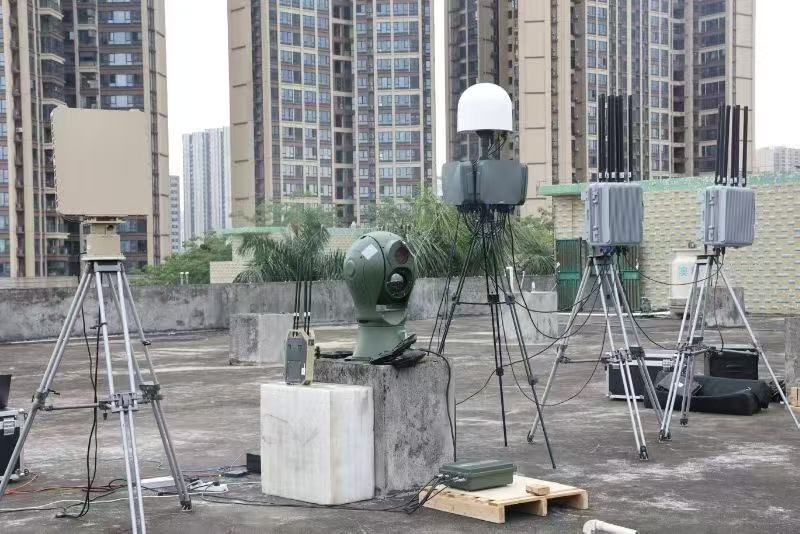
What is Radar?
Radar stands for Radio Detection and Ranging. It’s a device that uses radio waves to detect the presence, direction, distance, and speed of objects. In the context of anti-drone systems, radar helps in spotting drones in the airspace.
How Does Radar Work in Anti-Drone Systems?
1. Transmitting Signals
◦ First, the radar transmits radio – wave signals. These signals are sent out in a particular direction, like a beam of light from a flashlight. For example, think of it as a radar “shining” its radio – wave beam into the sky.
2. Receiving Reflected Signals
◦ When these radio – wave signals hit a drone, they bounce back, just like how light bounces off a mirror. The radar then receives these reflected signals, which are called “echoes” or “returns.”
3. Calculating Drone Parameters
◦ By measuring the time it takes for the signal to go to the drone and come back, the radar can figure out how far away the drone is. If the drone is moving, the frequency of the reflected signal changes (this is called the Doppler effect). Using this change in frequency, the radar can determine the drone’s speed and direction.
Key Factors to Consider When Choosing a Radar for Anti – Drone Systems
1. Detection Range
◦ You need to think about how far the radar can detect drones. If you want to protect a large area, like an airport or a military base, you’ll need a radar with a long detection range, perhaps several kilometers. For a smaller area, like a private property or a small event venue, a shorter – range radar might be sufficient.
2. Accuracy
◦ The radar should be accurate in determining the drone’s position, speed, and direction. High – accuracy radars can provide more precise information, which is crucial for effectively countering the drone threat. For example, if the radar can accurately pinpoint the location of a drone, it becomes easier to use other anti – drone measures like jamming or physical interception.
3. Resolution
◦ Resolution refers to the radar’s ability to distinguish between two closely – spaced objects. In the case of anti – drone systems, a high – resolution radar can tell the difference between multiple drones flying close to each other. This is important for dealing with drone swarms.
4. Operating Frequency
◦ Different radar operating frequencies have their own advantages and disadvantages. Some frequencies can penetrate through bad weather better, while others are more suitable for detecting small drones. For example, millimeter – wave radars are often used for their high – resolution capabilities and can work well in clear weather conditions.
5. False Alarm Rate
◦ A good radar for an anti – drone system should have a low false alarm rate. You don’t want the radar to keep detecting non – existent drones or mistake other objects like birds or small aircraft for drones. This can waste time and resources in responding to false threats.
Types of Radars Used in Anti – Drone Systems
1. Pulse Radar
◦ Pulse radars send out short bursts of radio – wave signals. They are commonly used in anti – drone systems because they can measure the distance to the drone accurately. They are relatively simple in design and can cover a wide range.
2. Continuous – Wave Radar
◦ These radars transmit a continuous stream of radio – wave signals. They are good at detecting the speed of drones using the Doppler effect. Continuous – wave radars are often used in combination with other types of radars to get a more complete picture of the drone’s movement.
3. Phased – Array Radar
◦ Phased – array radars can change the direction of their radar beam electronically, without physically moving the antenna. This allows them to quickly scan a large area and track multiple drones simultaneously. They are more advanced and expensive but offer high – performance capabilities for anti – drone defense.
Conclusion
Choosing the right radar for an anti – drone system is not an easy task. It requires careful consideration of factors like detection range, accuracy, resolution, operating frequency, and false alarm rate. By understanding your specific needs and the capabilities of different radars, you can make an informed decision. This will help you build an effective anti – drone system to protect your area from unwanted drone intrusions.
