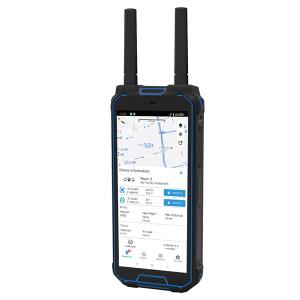
Today, let’s dive into the fascinating world of radio spectrum detection technology and its awesome applications in the realm of drone detection.
What is Radio Spectrum Detection Technology?
First things first, what exactly is radio spectrum detection technology? Well, you know how we use radio waves for all sorts of things, like communication, broadcasting, and even Wi-Fi? Radio spectrum detection technology is all about being able to “see” and analyze these radio waves. It’s like having a special pair of glasses that can detect and make sense of the invisible signals zipping through the air.
Devices equipped with this technology can pick up different frequencies within the radio spectrum. They can tell us which frequencies are being used, how strong the signals are, and even some details about the type of signals. For example, whether it’s a simple voice communication signal or a more complex data – transmitting signal.
Its Application in Drone Detection
Now, let’s talk about why this technology is so great for detecting drones.
1. Wide – Area Monitoring
One of the biggest advantages is its ability to cover large areas. You see, drones communicate with their controllers using radio signals. With radio spectrum detection technology, we can set up detectors in a particular area. These detectors can then scan the entire radio spectrum within their range. So, no matter where a drone is within that area, as long as it’s sending out radio signals (which it has to in order to be controlled), the detection system can spot it. For instance, in a large airport perimeter, multiple detectors can be placed to monitor a vast expanse, ensuring that no unauthorized drones can get close.
2. Fast Detection
Moreover, radio spectrum detection is really fast. As soon as a drone starts transmitting signals, the detectors can pick them up right away. There’s no need to wait for the drone to come into visual range or for some other slow – reacting detection methods. This speed is crucial, especially in security – sensitive areas. If a drone is approaching a restricted area, quick detection allows security teams to take immediate action.
3. No Line – of – Sight Requirement
Another cool thing is that it doesn’t rely on having a clear line of sight. Visual detection methods need you to actually see the drone, which can be difficult if the drone is flying at high altitudes, in bad weather, or behind obstacles. But radio spectrum detection technology can work through all of these situations. The radio signals can penetrate clouds, fog, and even some physical barriers to a certain extent. So, it doesn’t matter if it’s a foggy day or if the drone is flying behind a building; the detection system can still find it.
In conclusion, radio spectrum detection technology is a game – changer when it comes to drone detection. Its wide – area monitoring capabilities, fast detection speed, and lack of line – of – sight requirements make it an essential tool for keeping our skies safe from unauthorized drone intrusions. As technology continues to advance, we can only expect this technology to detect drones to get even better at protecting our airspace.