


Thermal Night Vision Camera vs. Watchtowers:
Why Traditional Wildfire Detection Falls Short
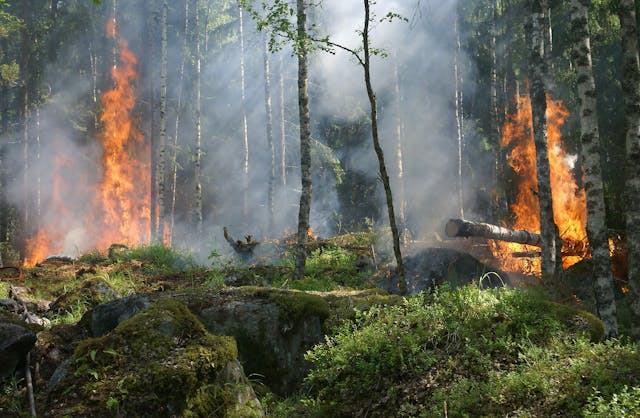
Wildfires are growing faster, spreading farther, and costing more than ever. The stakes are high—and the need for rapid, reliable wildfire smoke detection is critical. Traditional human lookouts in fire watchtowers, once the frontline of defense, now fall behind in speed, accuracy, and coverage.
Enter the Thermal Night Vision Camera—a powerful upgrade in automated wildfire detection that sees through darkness, fog, and smoke to protect forests before disaster spreads.
The Legacy Approach:
Human Lookouts in Watchtowers
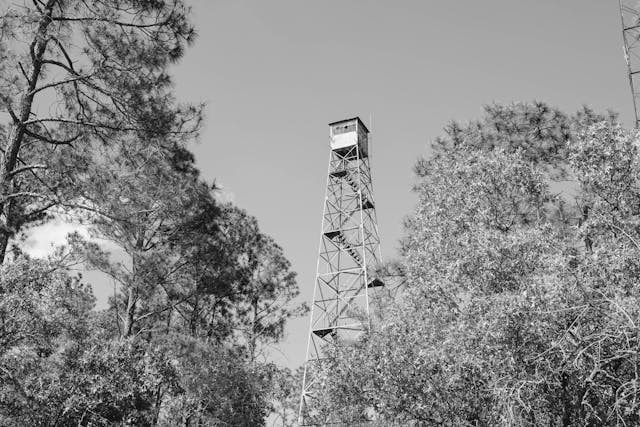
Limited Coverage & Line-of-Sight
Watchtowers depend on human vision and binoculars, which are limited by terrain, trees, and the Earth’s curvature. Hills, valleys, and dense canopies block sightlines, creating blind spots that delay fire detection.
Weather & Night Blind-Spots
Rain, fog, and heavy smoke easily obscure visibility. At night, detection becomes nearly impossible without artificial lighting—adding complexity and cost.
Human Factors: Fatigue, Slow Reports, High Costs
Even well-trained observers face fatigue, limited shifts, and reaction time delays. Staffing remote towers 24/7 incurs high labor costs, training, and management expenses. Manual radio or phone reporting adds further delays.
Error Rates and False Alarms
Missed ignitions, especially at night, can lead to catastrophic spread. On the other side, human error often causes false wildfire alarms by mistaking fog, chimney smoke, or sunlight reflections.
The Modern Solution:
Thermal Night Vision Camera-Based Detection
Dual-Spectrum Imaging 24/7
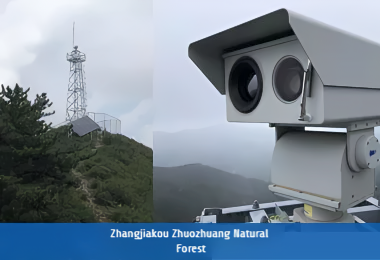
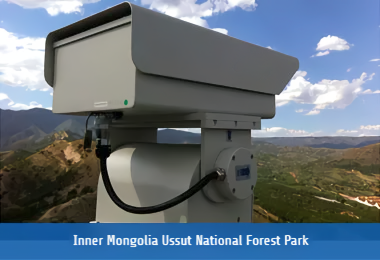
Our Thermal Night Vision Camera uses both white light and thermal imaging. It sees up to 8–12 km in daylight and 4–10 km thermally at night. This ensures full 24/7 surveillance—even in total darkness or poor visibility conditions.
All-Weather, Smoke-Penetrating Optics
Unlike traditional cameras, thermal imaging detects heat, not light. This means it can penetrate rain, snow, fog, dust, and even dense smoke. You get consistent performance in harsh forest environments year-round.
Automatic Smoke-and-Flame Recognition
The system’s intelligent software uses advanced algorithms to recognize smoke or flame in real-time. It triggers wildfire smoke alerts within seconds and minimizes false alarms by filtering out solar reflections, smoke stacks, or vehicles.
Precise Geo-Pinpointing for Fast Dispatch
With 0.01° pan/tilt accuracy and GIS fire mapping integration, our camera precisely locates the fire source. This reduces response time and helps fire teams act faster and more effectively.
Watchtower vs. Thermal Night Vision Camera:
Side-by-Side Comparison
| Feature | Watchtower | Thermal Night Vision Camera |
|---|---|---|
| Detection Range | 2–5 km (limited by sightline) | 8–12 km (day), 4–10 km (thermal) |
| Night Capability | No | Yes (24/7 thermal surveillance) |
| Weather Resilience | Poor in rain/fog/smoke | Excellent (thermal optics) |
| Response Time | 10–20 min (manual reporting) | <10 sec (auto alarm + geo-tag) |
| Staffing Cost | High | Minimal (unmanned monitoring) |
| False-Alarm Rate | High (human error) | <0.2/day per 10k ha |
| 10-Year OPEX | High | Low after year 3 |
Business Impact & ROI
Replacing outdated watchtowers with thermal night vision camera systems brings tangible results:
- Faster Containment: Early alerts enable quicker action, cutting suppression costs and minimizing burned acreage.
- Regulatory & Insurance Benefits: Automated wildfire monitoring supports ESG goals and reduces risk exposure.
- Lower Total Cost of Ownership: After year three, operating costs are significantly lower than manned towers—no salaries, less maintenance, and scalable deployment.
Deployment Considerations
Site Selection & Power Supply
The system can be mounted on towers, poles, or existing infrastructure. It supports grid power or off-grid setups using solar or wind systems, ideal for remote forests.
Network Backhaul Options
Data transmission can be configured via fiber, broadband, microwave, or even mobile networks like 4G/5G—depending on terrain and coverage.
Command Center Integration
Cameras feed directly into a central command system with GIS fire mapping, real-time monitoring, and emergency response coordination—all in one platform.
Scalability
The modular system supports handheld add-ons, mobile units, and multi-zone monitoring. Easily scale your wildfire surveillance camera network as your coverage needs grow.
Success Snapshot: Real-World Results
🔍 Real-World Insight: Detection Delays vs. Automation
- A PLOS ONE study (2024) by the University of Alberta and Alberta Wildfire revealed that fires detected through traditional means (watchtowers and public calls) in western Canada took an average of 10–12 hours to be officially reported.
- By contrast, Thermal Night Vision Camera systems have proven far faster. Data from UC San Diego and the Nevada Seismological Lab, cited by Scientific American (June 2021), showed these systems beat 911 callers by up to 10 minutes. In academic trials, automated thermal detection reduced response time from 40+ minutes to under 5 minutes.
➔ These findings make it clear: modern automated wildfire smoke detection systems significantly outperform traditional watchtower-based approaches in speed and reliability.
A Smarter Way Forward
The Thermal Night Vision Camera is not just a tool—it’s a smarter way to detect wildfires, protect ecosystems, and reduce risk. Traditional watchtowers, while historic, can no longer keep up with today’s wildfire threats.
If you’re ready to upgrade to a modern, all-weather wildfire smoke detection system, contact us today. Our team can help design a custom solution for your site.
