


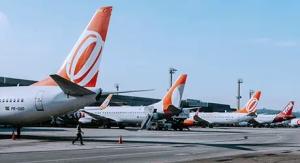
Civil aviation airport is an important national and regional transportation hub. However, in recent years, the wide application of UAVs has brought new challenges to the low-altitude safety of civil aviation airports. Although UAV manufacturers in various countries set flight restrictions on UAVs in the airport airspace, malicious or improperly operated UAVs may still pose a threat to the flight safety and normal operation of civil aviation airports.
Therefore, the protection of low altitude at civil airports has become crucial, we need to ensure the normal operation of flights and the safety of passengers.
The solution provided by Fanyue Industrial can achieve comprehensive protection of low altitude airspace of civil airports.
Our anti-drone systems enable rapid and accurate detection, identification, location and tracking of unauthorized drones, as well as real-time forensic technology for prosecution.
In addition, according to different threat levels, the system can take corresponding countermeasures, such as eviction, return, forced landing, etc.
This can effectively avoid flight delay accidents and potential flight threats caused by various types of UAV interference, and effectively ensure the normal operation of civil aviation airports.
Civil airports may suffer from the following attacks:
- Carrying out destructive attacks, including the impact or release of explosives or other dangerous substances
- Potential criminal threat, including surveillance of the surrounding environment, the movement of security personnel, and existing security facilities.
- Maliciously interfere with airport communications, which may delay normal flights or even cause serious aviation accidents.
How do our anti drone devices help these sites ?
01 Clarify the security requirements of the airport:
Matching suitable monitoring means: We can provide a variety of detection technologies and strategies, including radar, spectrum, photoelectric, etc., while ensuring the coordination between various security system components to achieve anti-UAV data transmission and monitoring.
02 Black and white list management of drones:
One-click black and white list: Identify and decode the features by scanning a wide range of radio frequencies, and automatically alert and send warnings when unauthorized drones are found.
03 Tracking and locating drones:
Visual intelligent system: Through the deep analysis of UAV signals, it can accurately detect the SN code, model, position, trajectory, time, distance and other relevant information of all drones within the early warning range and the position of the corresponding UAV pilot.
04 Counter unauthorized and malicious drones
Efficient countermeasures and backup schemes: deploy directional jamming devices at the core defense points respectively, suppress the UAV entering the defense area according to the preset frequency band, and make it crash land or return; lt can also be upgraded to a directional write frequency jamming device, which can suppress the UAV more targeted according to the frequency band displayed by the detection results of the front-end network, so as to reduce the harm to the surrounding electromagnetic environment. In addition, we can provide contingency countermeasures in special circumstances to ensure the safety of low altitude defense.
05 Continuous optimization and upgrading
Enhanced security: To keep up with evolving drone technology and other low-altitude threats, we keep your systems up to date with regular technology updates and system upgrades, improving overall reliability and security.
As you can see, the implementation of low altitude protection solutions in civil airports will have multiple effects:
Increased security at airports and mitigated possible risks from drone threats.
It ensures the normal operation of the flight and avoids the interference of the drone incident to the flight.
Enhanced airport emergency response capabilities to deal with potential drone threats in a timely manner.
Enhancing the airport’s reputation and passenger satisfaction, making it a safer hub for air traffic.