


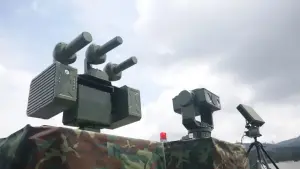
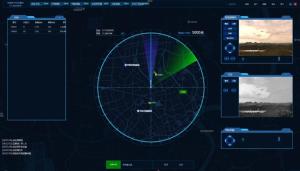
Anti drone radar, as an important means of drone monitoring and countermeasures, plays a crucial role in ensuring national security, public safety, and specific regional security. the following is a detailed analysis of the advantages and challenges of anti drone radar, meantime, an exploration of technological development trends.
01
Advantages of anti drone radar
1, Long range detection capability:
Anti drone radar can detect the presence of drones even hundreds of kilometers. This feature enables the radar system to issue alerts, and take necessary countermeasures before the drone approaches sensitive areas. So,it provides ample time for early warning.
2, 24/7 working ability:
The radar system is not affected by weather conditions. Because it can work normally in rainy, foggy, or nighttime conditions, ensuring continuous monitoring of the drone. This advantage enables the radar to maintain stable detection performance, even under complex and changing weather conditions.
3, High precision measurement:
Radar can provide precise information on the position, speed, and altitude of drones. So it helps to accurately predict their flight trajectory and assess the level of threat. The high-precision measurement capability, enables radar systems to more accurately determine the intentions, and potential threats of drones.
4, Multi target monitoring capability:
Anti drone radar can simultaneously monitor multiple drone targets, making it easier to respond to large-scale drone swarm attacks. So,this feature enables the radar system to quickly identify and track each target, when facing multiple drone threats, ensuring safety.
02
Disadvantages of anti drone radar
1, Blind spot issue:
If the target exceeds the radar set frequency band, detect it is difficult. In fact, it’s a blind spot in radar detection. In addition, radar may also have blind spots when detecting drones of specific shapes or materials, which increases the difficulty of detection.
2, Weak close range detection capability:
Ground clutter, building reflections, and other factors will affected radar when detecting targets at close range, resulting in a decrease in detection capability. In addition, radar relies heavily on humans, and requires high-performance cameras to capture images before identifying drone targets.
3, High cost:
The research and development, production, and maintenance costs of radar systems are relatively high, which maybe a burden for some units, or organizations with limited budgets.
4, Electromagnetic interference:
In complex urban environments, there are numerous sources of electromagnetic interference, such as wireless communication devices, power lines, etc., which may affect the performance and detection accuracy of radar.
03
Technological development trends
1, Improve sensitivity and resolution:
With the continuous advancement of technology, it’ll further improve the sensitivity and resolution of anti drone radar, thereby enhancing the detection capability of small targets and stealth targets. This will enable the radar system to more accurately identify drone targets, meantime improve detection efficiency.
2, Multi source information fusion:
By combining other monitoring methods such as optical sensors, acoustic sensors, etc., multi-source information fusion can be achieved to improve the reliability and accuracy of the monitoring system. Multi source information fusion technology will enable radar systems, to obtain more comprehensive information about unmanned aerial vehicle targets, improving the accuracy of detection and recognition.
3, Intelligence and automation:
Future anti drone radar systems, will place greater emphasis on the development of intelligence and automation. By introducing artificial intelligence technology, achieves automatic recognition, tracking, and classification of targets, reducing manual intervention and improving the system’s response speed and accuracy.
4, Reduce costs and volume:
With the maturity of technology and large-scale production, the cost of anti drone radar is expected to be further reduced, while with more compact and portable size. This will make the radar system easier to deploy and maintain, improving its applicability in various scenarios.
5, Enhance anti-interference ability:
In response to complex electromagnetic environments, future anti drone radar systems will place greater emphasis on enhancing their anti-interference capabilities. By adopting advanced signal processing techniques and filtering algorithms, the impact of electromagnetic interference on radar performance is reduced, ensuring the stability and reliability of the system.
In summary, anti drone radar plays an important role in ensuring safety, but there are also some drawbacks and challenges. With the continuous advancement and innovation of technology, future anti drone radar systems will pay more attention to improving sensitivity and resolution, achieving multi-source information fusion, intelligent and automated development, and reducing costs and volume.

