


The 2025 Anyang·Tangyin “Zhouyi Cup” Half Marathon used a fixed drone detection and jamming system to keep low-altitude airspace safe along the race route. One FYDR200-ABC integrated detection–jamming–spoofing platform was deployed near the course, providing up to 10 km of drone detection and several kilometers of jamming coverage.
As a result, the event ran smoothly with no drone-related disruption while the command center always had real-time awareness of the airspace above runners and spectators.
Why are drones now a critical security concern for marathons and major public events?
Drones have become part of everyday life for filming, media, and hobby use. At the same time, they introduce new safety and security risks at crowded events.
Unregulated flights can appear suddenly above the start line, at bottlenecks, or near the finish. A drone flying too low can distract runners, interfere with TV helicopters, or collide with equipment.
It can also live-stream sensitive routes, carry dangerous payloads, or create panic if it crashes into the crowd.
Traditional perimeter security mainly covers ground threats. However, modern city marathons run through open streets, riversides, and parks, where the low-altitude airspace is hard to control with patrols alone.
Regulators and law-enforcement agencies are therefore paying closer attention to low-altitude defense and event airspace management.
What specific security challenges did the 2025 Anyang·Tangyin Half Marathon face?
The race attracted over 10,000 runners from across China. They started from Youli City and followed a scenic route along the Tanghe National Wetland Park, creating a long, open, and visually exposed course.
For organizers and public-security departments, three challenges stood out:
- The course stretched over a large distance, which ground patrols could not fully cover in real time.
- Large groups of runners and spectators gathered in several road sections.
- Commanders needed continuous, reliable awareness of the low-altitude airspace before, during, and after the race.
Their goal was clear: build a practical “no-fly bubble” around key parts of the route without disturbing communications or the event atmosphere.
Why choose a fixed integrated detection–jamming–spoofing solution over handheld counter-drone guns alone?
Handheld drone countermeasure guns are useful as a last line of defense. Operators can point at a visible drone and disrupt its control link.
Yet this approach has limits. It needs trained staff, a line of sight, and constant vigilance along the course.
In contrast, a fixed integrated solution such as FYDR200-ABC drone detection and jamming system provides wide-area, continuous protection with fewer operators.
The system combines full-band radio detection, long-range jamming, and navigation spoofing in one platform. It scans from 70 MHz to 6 GHz, covering mainstream consumer drones, FPV drones, and many custom radio links.
Once installed, the detection unit can link with one or more jamming units in a “1+N” collaborative architecture. This allows a single system to protect the key start/finish area while extending coverage along the race route.
For decision-makers, that means higher situational awareness, lower manpower requirements, and easier integration with the command center.
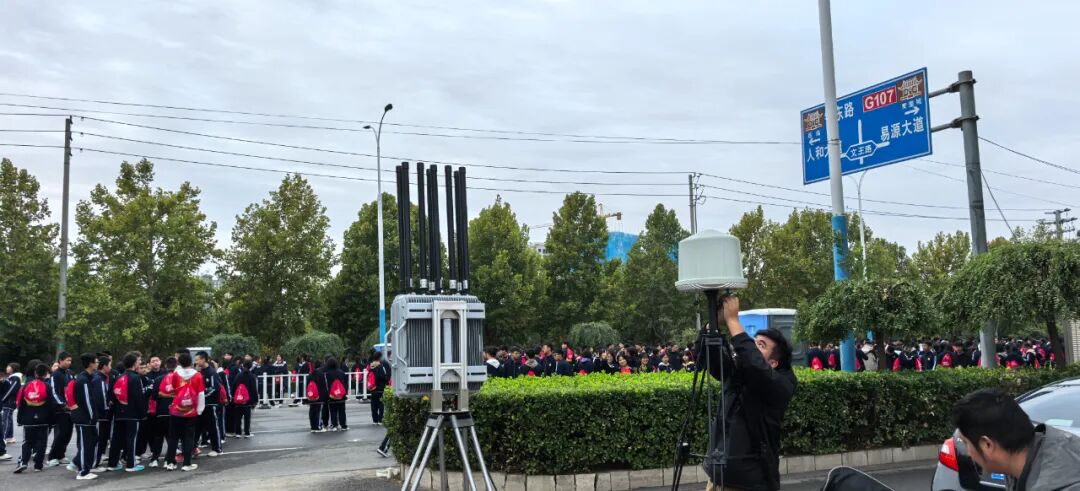
How exactly was a drone detection and jamming system deployed along the half-marathon route?
Before race day, the security team and solution provider conducted a site survey. They assessed the start and finish areas, bends with dense spectators, and nearby roads that could be used by drone operators.
Based on this, they selected a vantage point where the fixed detection antenna could oversee up to 10 km around the venue.
The detection module with its dome-shaped antenna was mounted on a tripod beside the road. The jamming host, equipped with multiple vertical antennas, stood nearby in a compact, rugged enclosure.
Power and network lines were prepared in advance. The system was then connected to the central command platform, which displayed a GIS map of the area, device status, and any drone intrusions.
Operators configured blacklists and whitelists so that authorized drones, if any, could be allowed, while unknown drones would trigger alerts.
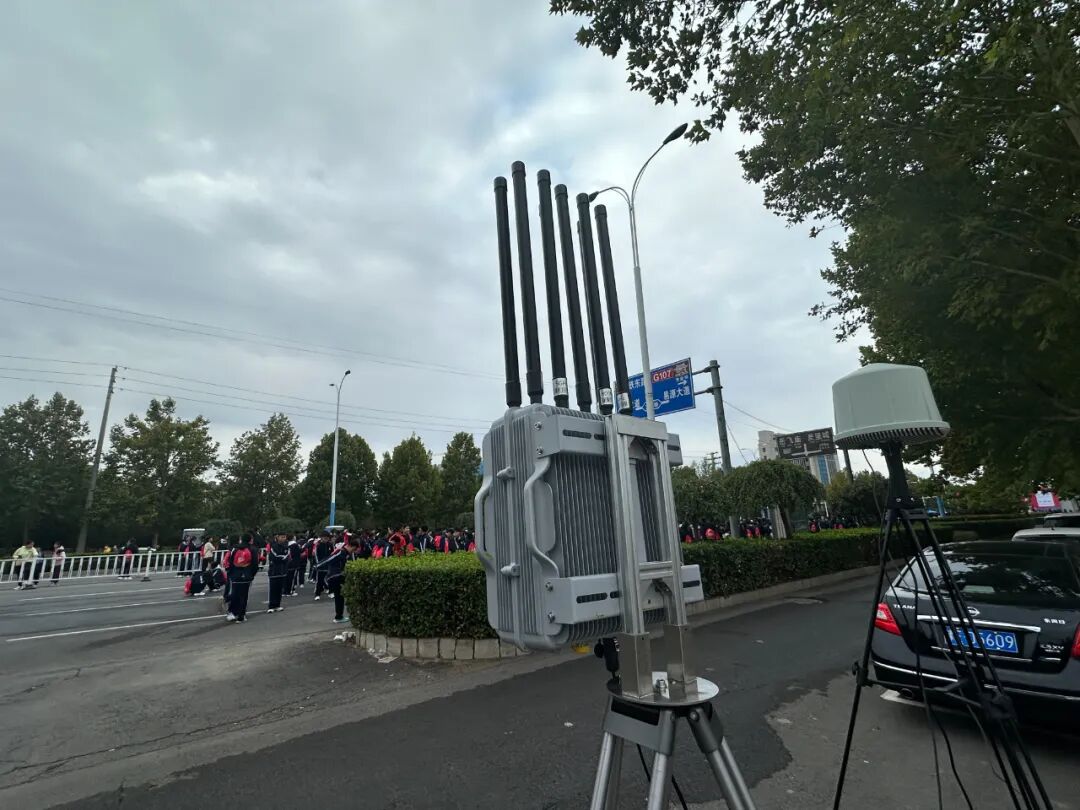
What airspace coverage and capabilities did the system provide during the event?
In simple terms, the FYDR200-ABC acted as the race’s “radar and shield” for drones.
On the detection side, it scanned the entire 70 MHz–6 GHz band and focused on key civilian and FPV control and video frequencies such as:
- 800–900 MHz
- 1.2–1.4 GHz
- 2.4 GHz
- 5.2–5.8 GHz
It offered up to 10 km detection range in suitable conditions and 360-degree azimuth coverage.
On the mitigation side, the jamming unit provided at least 3 km of effective range on major control, navigation, and video transmission bands.
At the same time, the navigation spoofing module could create a 1–3 km spoofing bubble around the site. This enabled strategies such as directed expulsion, area denial, or controlled misguidance of intruding drones.
For security teams, this translated into early warning, accurate localization, and flexible neutralization options. They could decide whether to simply monitor, jam the control link so the drone hovered or landed, or apply spoofing to force it away from the protected airspace.
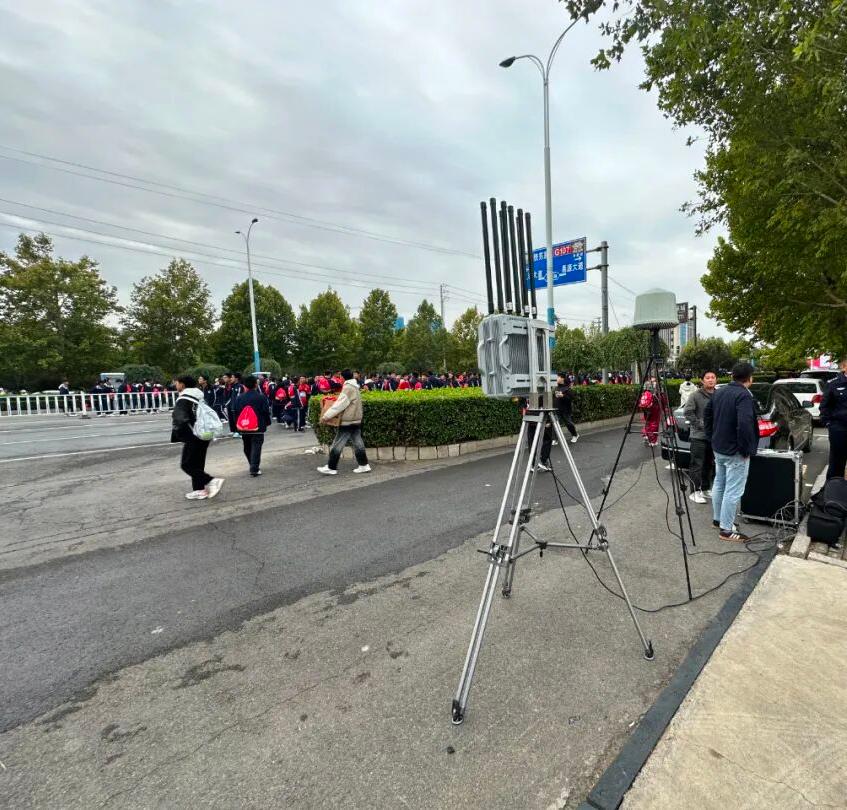
What actually happened on race day—and how did the system help?
On race morning, the fixed system was powered on well before the starting gun. It scanned continuously and remained active throughout the event.
Any drone-related signal within roughly 10 km would display on the command platform with distance, altitude, and trajectory, allowing rapid assessment.
During the race, the equipment operated quietly at the roadside, next to police vehicles and staff. Runners passed nearby without interruption, and the general public saw only a compact, tripod-mounted device and a slim antenna array.
Because the system provided continuous low-altitude monitoring, the organizers and public-security units maintained strong confidence in their ability to react if a rogue flight appeared.
In the end, the half-marathon proceeded smoothly, with no drone-related incidents reported and no need for last-minute emergency measures.
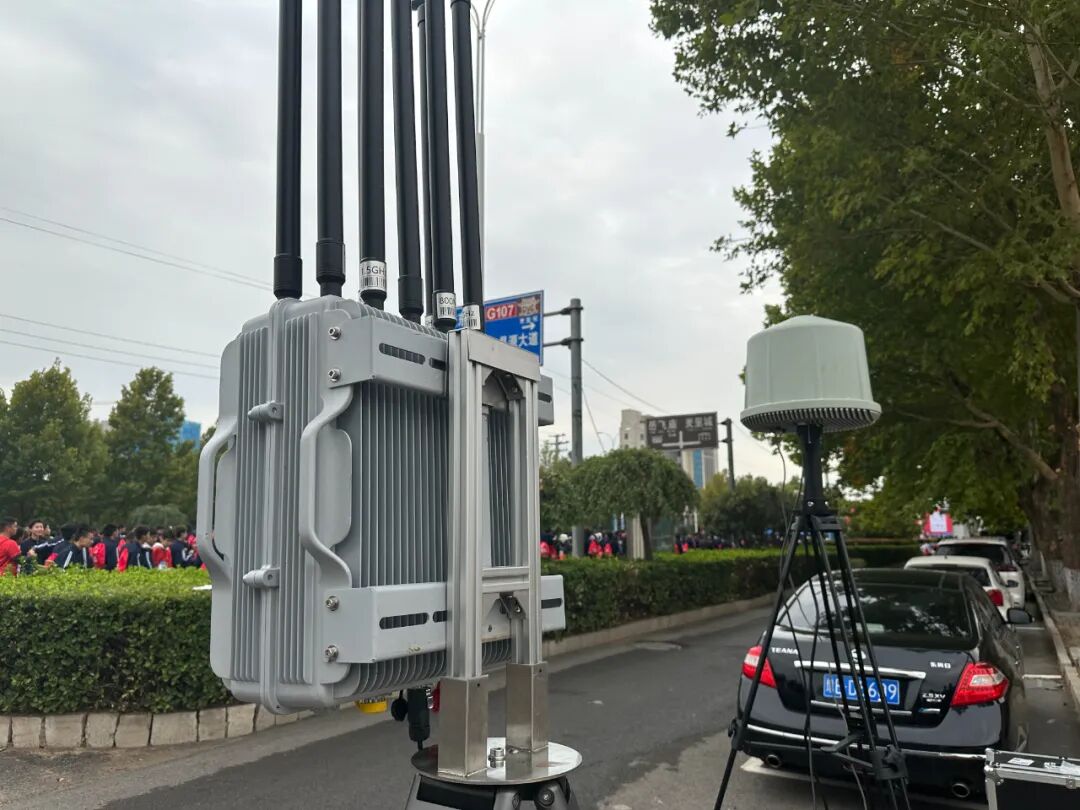
What were the key results and value for the organizer and security agencies?
From an operational perspective, the unattended nature of the solution reduced pressure on human resources.
Once configured, the platform handled automatic detection, identification, and mitigation, triggering the jamming and spoofing functions when required.
Typical response times were:
- Detection within about 10 seconds
- Jamming within about 7 seconds
- Spoofing within about 4 seconds
This meant the full detect–decide–act chain could complete in seconds.
From a business perspective, the organizer avoided the cost of deploying many handheld devices and extra operators along the long race route.
The fixed platform can also be reused for future marathons, concerts, and national-day events in the same city, or moved to protect other sensitive sites such as industrial parks or border checkpoints.
Reputationally, the project demonstrates to regulators, sponsors, and runners that low-altitude security is treated as seriously as ground security.
This supports compliance with emerging rules on low-altitude defense and strengthens the city’s image as a safe host for large-scale events.
What makes FYDR200-ABC different from typical anti-drone solutions?
Several aspects differentiate this solution from many stand-alone products on the market.
Detection capability
This drone detection and jamming system supports full-band scanning from 70 MHz to 6 GHz, 360-degree azimuth coverage, and high direction-finding accuracy of up to ±3°.
It can also detect FPV video transmission and display real-time telemetry such as drone distance, altitude, speed, model, and trajectory.
Handling FPV and RF control drones
Dedicated jamming power targets common control, navigation, and video bands, including:
- 700–840 MHz
- 860–930 MHz
- 1080–1340 MHz
- 1560–1620 MHz
- 2.4 GHz
- 5.1–5.8 GHz
In practical terms, this means coverage of most consumer, FPV, and modified drones used today.
Unattended operation and integration
The cloud platform offers GIS maps, device status, intrusion logs, statistics, whitelist/blacklist management, and remote control of multiple units.
Logs of drone intrusions can be replayed and exported as reports for later analysis or evidence.
Robust engineering
The housing uses aviation-grade aluminum and is designed to operate from −40°C to +60°C.
This suits harsh outdoor environments and long-term deployments at fixed sites.
How can critical-infrastructure owners and event organizers apply these lessons?
The marathon project highlights a few practical steps that any buyer can follow.
First, define the protection zone.
Is it a stadium, wetland park, refinery, prison, power plant, or border crossing? The shape and size of the zone determine how many detection and jamming units you need.
Second, clarify which drone types pose the highest risk.
Consumer quadcopters, FPV racing drones, and modified platforms have different flight profiles and signal characteristics. This will guide how you tune frequency coverage and response strategies.
Third, decide whether you need 24/7 unattended protection or coverage only during specific events.
A fixed backbone system like FYDR200-ABC can stay on guard continuously and then support temporary deployments for marathons, concerts, or VIP visits.
Mobile countermeasure guns and patrol teams can then act as the final layer.
Finally, plan integration with existing systems such as video management, PSIM, C2 platforms or radio-monitoring networks.
A connected solution allows centralized command, fewer blind spots, and faster cross-team coordination.
What should system integrators and channel partners know about deploying FYDR200-ABC?
From a deployment point of view, the architecture is straightforward.
One detection host with its tripod-mounted antenna pairs with one or more jamming hosts equipped with multiple antennas.
Both use standard AC 220 V power and Ethernet interfaces for networking.
Typical integration tasks include:
- Connecting the devices to the local command center
- Configuring whitelists and blacklists
- Setting alert thresholds
- Training operators on the software interface
Because the system supports log playback and statistics, integrators can also help customers build internal reporting templates and compliance documentation.
Commercially, this model opens opportunities across:
- Marathon and triathlon circuits
- Stadiums and arenas
- Industrial parks and logistics hubs
- Prison systems and border regions
- Energy and critical infrastructure sites
A single reference project, such as the Anyang·Tangyin Half-Marathon, provides a concrete example that partners can show to prospective clients.
Is this type of system the right fit for your project?
If you need to protect a fixed area, such as a stadium, park, industrial plant, or prison, and you require long-range detection and active mitigation out to several kilometers, a fixed integrated drone detection and jamming system like FYDR200-ABC is worth serious consideration.
It offers unattended operation, strong coverage, and a clear upgrade path to multi-site low-altitude defense networks.
For security agencies, critical-infrastructure owners, and event organizers, the next step is simple.
Share your site layout, surrounding environment, and risk profile.
A specialist team can then design a tailored low-altitude defense solution, provide a detailed technical sheet to support your internal decision process.

