The Grim Reality of 2025’s Forest Fires
In 2025, forest fires have struck many parts of the world. In the United States, especially in California, huge wildfires have broken out. The Santa Ana winds made these fires spread fast. They burned a lot of land, destroyed many homes, and sadly, caused several deaths. In France, forest fires also brought big problems. These fires not only damaged the beautiful forests but also forced many people to leave their homes.
Core Components of Early Warning Systems
These systems combine hardware and software to monitor forests 24/7. Here’s what they include:
-
Front-End Monitoring Devices
These devices collect real-time data from forests:
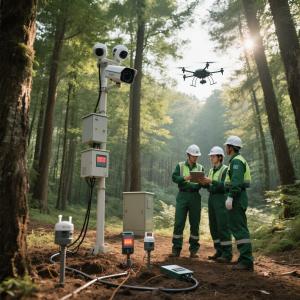
- Dual-Spectrum Thermal Cameras: Combine visible light and infrared to detect smoke and flames, even in fog.
- Meteorological Stations: Measure wind speed, humidity, and temperature to predict fire risks. Some stations also track soil moisture to assess dryness.
- Handheld Terminals: Rangers use these rugged devices to report fires manually. They sync with central systems via GPS.
- Environmental Sensors: Detect flammable gases like methane or CO₂, which spike before fires.
-
Transmission Infrastructure
Data needs to reach command centers quickly:
- Fiber Optic Cables: Used in areas with existing networks for stable, high-speed transmission.
- Microwave/Wireless Towers: Deployed in remote zones without cables.
- Satellite Hotspots: China’s Fengyun satellites scan forests daily, flagging hot areas within 3 minutes of detection.
-
Command Center Platforms
The “brain” of the system analyzes data and coordinates responses:
- AI Fire Recognition Software: Uses deep learning to distinguish smoke from dust or fog. Accuracy rates exceed 95% in systems.
- GIS Mapping: Overlays fire locations on 3D maps, showing roads, water sources, and firebreaks. Commanders use this to plan routes.
- Decision Support Systems: Generate evacuation plans, estimate fire spread, and allocate resources.
-
Emergency Communication Tools
When fires break out, clear communication saves lives:
- Portable Directional Loudspeakers: Devices could be used in traffic jams or isolated villages without power or internet.
- Drone Networks: Equipped with cameras and loudspeakers, drones patrol forests and guide evacuees.
Conclusion
Modern forest fire systems blend cameras, sensors, and AI to act faster than ever. From thermal imaging to satellite hotspots, these tools turn “detection after ignition” into “prevention before flames.” As technology evolves, protecting China’s green heritage becomes smarter, safer, and more efficient